
Tired of watching soil wash down your hill every time it rains? A good retaining wall turns that mess into structure, and structure into style.
With the right backyard retaining wall ideas, you can stop erosion, protect your home, and gain usable outdoor space that actually looks inviting. You do not need an engineering degree to understand the basics, just a clear plan and respect for what tons of wet soil can do.
This guide walks through design options, cost levels, and DIY limits so you can choose the right approach for your yard and your comfort level.
Why Retaining Walls Matter For Erosion Control
Water always wins if you let it. On a sloped yard, every storm pulls a little more soil downhill. Over time, that can:
- Expose roots and kill grass
- Wash mulch onto your patio or driveway
- Send water toward your foundation or basement
A retaining wall holds that soil in place, spreads out water pressure, and guides runoff to safer spots. At the same time, it frames your outdoor space and gives you clean lines for patios, steps, and garden beds.
Think of it as a sturdy backbone for your yard, not just a row of blocks.
Core Building Basics For Any Backyard Retaining Wall
Before looking at styles and materials, a quick word on what makes a wall actually work. These basics apply whether you build it yourself or hire it out.
Drainage: Let Water Escape Before It Pushes
Most failed walls have one thing in common: trapped water. When soil gets soaked, it gets heavy and pushes hard on the back of the wall.
Smart drainage usually includes:
- A compacted gravel base under the wall
- Free-draining gravel or stone behind the wall
- Perforated drain pipe at the base, daylighted to a safe outlet
- Weep holes or gaps where water can escape in front
If you skip drainage, you are asking that wall to hold back a loaded sponge. It might look fine the first year, then bulge or crack once winter freeze and heavy storms hit.
Base And Backfill: Do Not Rush The “Boring” Parts
The wall you see is only as strong as the base you do not see.
- Excavate below grade for the first course of blocks or stone
- Compact a thick layer of crushed stone, not loose dirt
- Step the base up the slope instead of trying to “float” the wall on the surface
For most DIYers, walls up to about 3 or 4 feet tall are the practical limit. Anything taller, especially on a steep slope, should involve a professional and often an engineer.
Backyard Retaining Wall Ideas By Style And Budget
Now to the fun part. Here are common styles that balance erosion control with looks, along with rough pros, cons, and maintenance needs.
Stacked Concrete Block Walls For A Clean, Modern Look
Segmental concrete blocks are one of the most popular backyard retaining wall ideas for good reason.
- They come in many colors and textures
- They lock together, which helps stability
- Many systems are friendly to careful DIY work
Pros:
Good strength, flexible layouts, works well with paver patios and walkways. Low maintenance besides an occasional rinse and weed check.
Cons:
Material cost is mid range, and larger projects still take serious labor.
Natural Stone Walls For A Timeless Yard
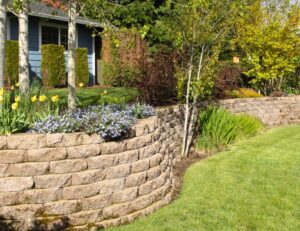
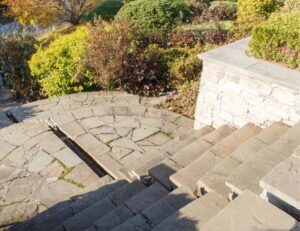
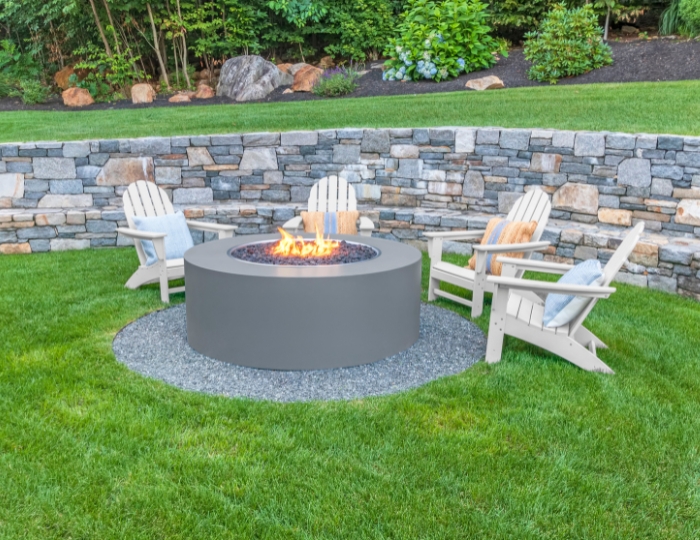
Nothing beats the look of real stone. Cut stone blocks or fieldstone walls blend into plantings and give your yard a classic feel.
Pros:
High-end appearance, very long lifespan when built correctly. Great for both small garden walls and large terraces.
Cons:
Higher material and labor costs, heavy pieces, and more skill needed to stack safely and neatly. Often best left to a pro crew unless you are working on a very low wall.
Timber Retaining Walls For Rustic Charm
Pressure-treated wood or landscape timbers give a warm, natural style and can be faster to install.
Pros:
Lower upfront material cost, simple layout, and easier cutting and fastening for many DIYers.
Cons:
Shorter lifespan than concrete or stone, risk of rot, shifting, and pest damage over time. Needs more monitoring and future replacement.
Timber works best for small, low walls or temporary solutions, not key structural areas.
Boulder Walls For Big Slopes And Natural Style
Large boulders stacked in a rough wall look like part of the hill itself. They fit big, sloping backyards and properties where you want a bold, natural feature.
Pros:
Excellent strength when placed correctly, great drainage between stones, eye-catching style.
Cons:
Heavy equipment is almost always required, and placement is a skill. Not a good DIY choice unless you already work with machinery.
Terraced Retaining Wall Ideas For Steep Yards
If your hill is tall, a single high wall is not just unattractive, it can also be risky. Terracing breaks that height into several shorter walls with flat areas between them.
Picture a staircase for your yard, where each tread is a planting bed, a path, or even a patio.
Terraces are perfect for:
- A series of raised garden beds
- Children’s play areas on flat pads
- A lower fire pit area below a main patio
Stepped systems handle water better and feel more inviting than one giant wall. For complex slopes, steep grades, or walls over 4 feet, it is smart to look at professional Terraced retaining wall solutions. That kind of project needs detailed planning, proper drainage layout, and sometimes engineering.
Pairing Walls With Patios, Steps, And Groundcovers
Retaining walls do more than hold dirt. They can shape your whole outdoor living area.
For a small suburban yard, try:
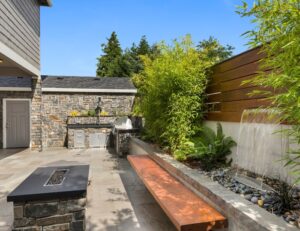
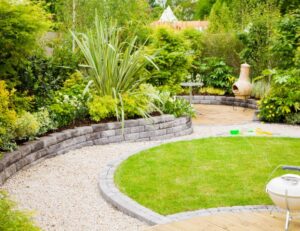
- A short seat wall wrapping around a paver patio
- A raised planting bed along the fence to hide a slope
- Wide, shallow steps that connect the house to a lower level
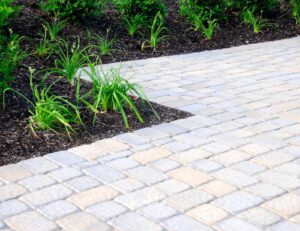
If you already have or want brick paver areas, a matching wall system creates a pulled-together look. Talk with a pro who offers complete Retaining wall design services if you want patio, steps, and walls to feel like one plan, not separate pieces.
To help with erosion, pair your wall with smart planting:
- Use groundcovers like creeping thyme, sedum, or pachysandra between terraces
- Mulch beds to keep soil from splashing and washing
- Mix shrubs with deeper roots for extra slope stability
Plants soften the hard lines of masonry and soak up some of the water that would otherwise pound the soil.
Pros, Cons, And Maintenance At A Glance
Here is a simple way to compare common options.
| Wall Type | Cost Level | Lifespan | DIY Friendly? | Maintenance Needs |
|---|---|---|---|---|
| Concrete block | Medium | Long | Yes, low wall | Check for weeds, occasional rinse |
| Natural stone | High | Very long | Limited | Very low once built |
| Timber | Low | Short to medium | Yes, low wall | Watch for rot, movement |
| Boulder | Medium | Long | No | Very low |
| Gabion (rock baskets) | Medium | Long | Maybe, small | Inspect wire, remove debris |
These are general ranges, since soil type, drainage, and climate change how long each wall lasts.
When To Call A Professional
Plenty of handy homeowners can handle a short, simple wall. Safety and long-term cost still matter though. Bring in a pro when:
- The wall will be over 3 to 4 feet tall
- The wall will sit near a driveway, parking area, building, or pool
- The slope is steep or the soil is very wet or clay-heavy
- You need to tie in steps, patios, or drainage systems
- Local rules require permits or engineering
If you own a commercial property, or your yard gets heavy snow loads from plows, a professional design becomes even more important.
For more detail on finishes, layouts, and how walls can dress up your yard, take a look at these Seasonal Landscape retaining wall options. They give a sense of how different materials change both look and performance.
Bring Your Backyard Slope Under Control
That bare, eroding hill behind your house does not have to stay a problem. With the right backyard retaining wall ideas, it can become extra seating, a new patio, terraced gardens, or all three.
Start by choosing a style that fits your budget and your willingness to maintain it. Respect water, plan for drainage, and know where your DIY limits stop. When the project is taller, steeper, or closer to important structures, lean on experienced help.
In the end, a well-planned retaining wall protects your property, adds value, and gives you more outdoor space to enjoy instead of fight.