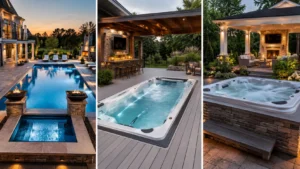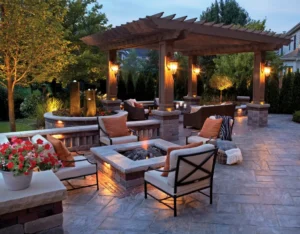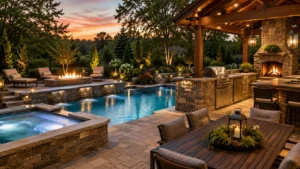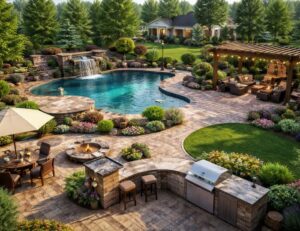

If you’re planning a backyard transformation in Algonquin, Barrington, Lake Forest, Naperville, Arlington Heights, Crystal Lake, Inverness, or surrounding Chicagoland communities, you may be asking:
Should we install the pool first—or design the entire backyard at once?
It’s a common question. And the answer can dramatically affect your budget, layout, drainage, and long-term satisfaction.
Here’s why designing the full outdoor environment before installing a pool is almost always the smarter move.
The Biggest Mistake Homeowners Make
Many homeowners start with one feature—usually the pool.
They install it… then realize:
-
The patio feels too small
-
There’s no defined entertaining space
-
Drainage wasn’t considered
-
The outdoor kitchen placement is awkward
-
Lighting wasn’t pre-wired
-
The yard lacks cohesion
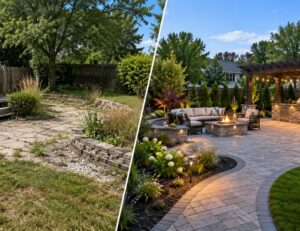
A pool is a major anchor feature. But without a comprehensive plan from a professional Landscape Architecture Design, everything built afterward becomes reactive.
That often leads to higher costs and compromised design.
Why Full Backyard Planning Works Better
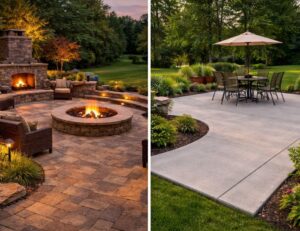
A complete design approach starts with a unified vision that includes:
-
Pool placement
-
Patio layout
-
Walkways
-
Retaining walls
-
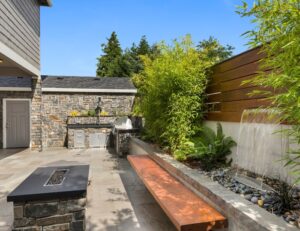
Outdoor kitchen zones
-
Pergolas or pavilions
-
Fire features
-
Lighting
-
Drainage strategy
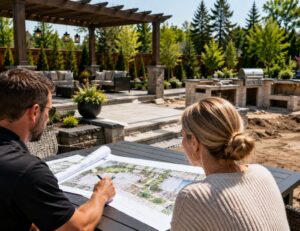
Using tools like 3D Landscape Design, homeowners can visualize the entire outdoor living space before construction begins.
That means fewer surprises—and better long-term results.
How Pools Impact the Rest of the Yard
Installing a pool changes:
-
Elevation and grading
-
Drainage patterns
-
Traffic flow
-
Privacy considerations
-
Utility routing
-
Patio square footage needs
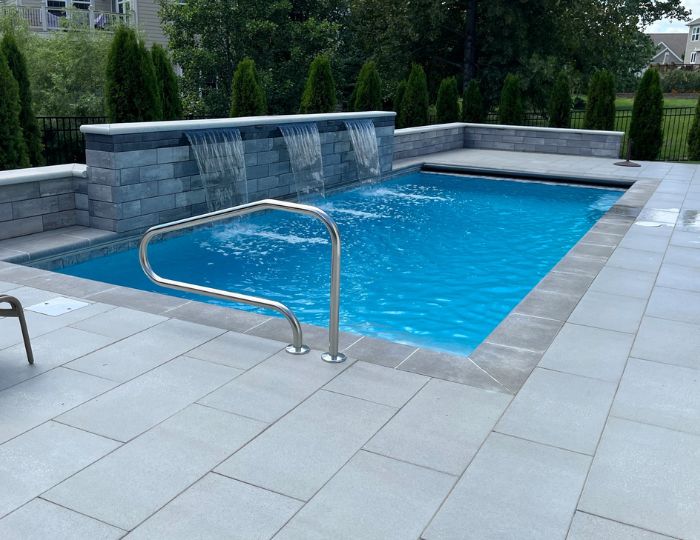
If you plan to include Brick Paver Patios or Paver Stone Walkways, those should be designed in conjunction with the pool—not afterward.
Retrofitting hardscapes around a completed pool often limits material options and increases excavation costs.
When It Might Make Sense to Build the Pool First
There are limited situations where installing the pool first may work:
-
The yard is very large and flexible
-
The homeowner plans minimal hardscape
-
The project is intentionally phased with a master plan already created
The key distinction?
Even if you build in phases, the master plan must come first.
Without that, later additions may conflict with the original pool placement.
Designing Around Entertaining, Not Just Swimming
Most homeowners don’t use their pool 8 hours a day.
What they do use regularly:
-
Patio seating areas
-
Grilling and dining spaces
-
Shade structures
-
Fire features
-
Evening lighting
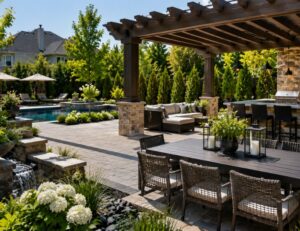
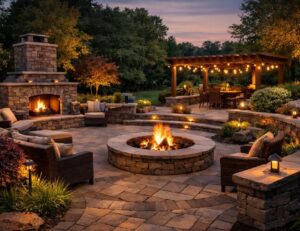
If you’re considering Outdoor Kitchens or gathering spaces like Outdoor Fireplaces, they should be positioned strategically in relation to the pool—not squeezed in afterward.
Similarly, structures like Pergolas or premium options like Struxure Pergolas should align with sightlines and circulation paths.
A pool is a feature.
A backyard is an experience.
Drainage and Structural Considerations
In Illinois climates, freeze-thaw cycles, heavy rainfall, and soil movement matter.
Pools, patios, and retaining walls must work together structurally.
If your property has slope challenges, incorporating Retaining Walls early in the design process ensures stability and long-term durability.
Poor sequencing can lead to:
-
Settling pavers
-
Pool deck shifting
-
Water pooling near foundations
-
Costly rework
Planning everything together prevents those problems.
Budget Strategy: Full Build vs Phased Approach
Some homeowners choose to complete everything at once. Others phase construction over 1–3 seasons.
Either approach can work—but only if guided by a unified design plan.
Phased strategy example:
-
Phase 1: Master design + pool
-
Phase 2: Patio + retaining walls
-
Phase 3: Kitchen + pergola
-
Phase 4: Lighting + finishing details
Without design coordination, Phase 3 may require tearing into Phase 1.
Residential vs Estate-Scale Properties
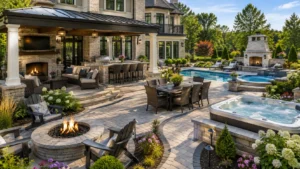
For larger properties in Lake Forest, Barrington, Inverness, or Highland Park, full estate-style planning is especially important.
Pools often integrate with:
-
Expansive patios
-
Multi-level terraces
-
Long walkways
-
Driveway connections like Brick Paver Driveways
-
Custom structures such as Outdoor Pavilions
Large properties amplify mistakes when projects aren’t planned holistically.
The Smarter Approach
If you’re considering a pool, the smartest first step is not excavation.
It’s conversation.
Review past projects in the Portfolio to understand what cohesive design looks like.
Then connect with a design team through the Contact Page to map out the entire vision before breaking ground.
Because once the pool is in, the layout is locked.
TL;DR / Key Takeaways
-
Installing a pool without a full backyard plan often leads to costly redesigns.
-
A master design should include patios, kitchens, structures, lighting, and drainage.
-
3D design tools help visualize the entire outdoor experience before construction.
-
Phasing is fine—if guided by a complete blueprint.
-
Proper sequencing protects both budget and long-term property value.
-
Chicagoland homeowners benefit most from strategic, whole-property planning.