
Walkways do more than guide people across your yard—they shape how your landscape looks, feels, and functions. The right walkway design can improve curb appeal, connect outdoor spaces, and create a welcoming path for guests.
One of the most common questions homeowners ask when planning a walkway project is whether they should choose pavers or concrete. Both options have advantages, but they differ in durability, appearance, maintenance, and long-term value.
Understanding these differences can help you choose the best material for your property.
Why Walkways Are Important in Landscape Design
Walkways serve both practical and aesthetic purposes. They connect driveways, patios, entrances, and garden areas while helping guide visitors safely around the property.
Professionally designed walkways are often part of a larger outdoor plan that includes patios, retaining walls, and entertainment spaces. Many homeowners incorporate walkways as part of broader hardscaping services that transform their outdoor environment.
When thoughtfully designed, walkways become an integral feature of the landscape rather than just a functional path.
What Is a Paver Walkway?
A paver walkway is built using individual paving stones installed over a compacted base. The stones interlock together, creating a durable and visually appealing pathway.
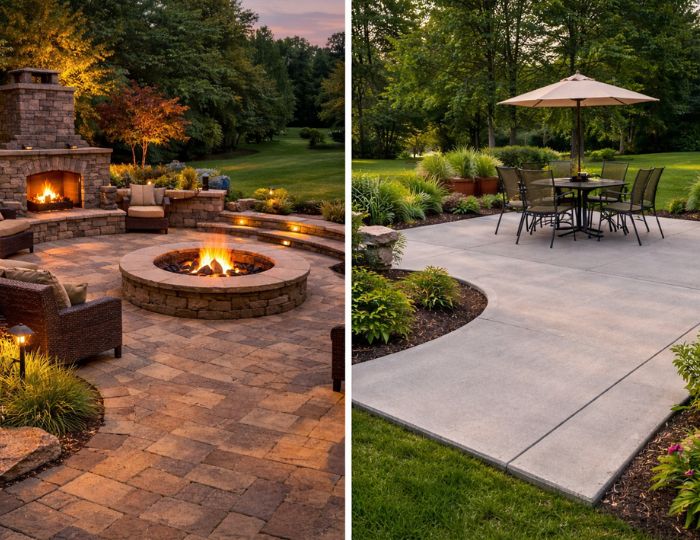
Professionally installed paver stone walkways are known for their versatility and long-term durability. They come in a wide range of shapes, colors, and patterns, allowing homeowners to match the design with their patio, driveway, or overall landscape style.
Paver walkways are commonly paired with features like patios, driveways, and outdoor gathering areas to create a cohesive outdoor design.
What Is a Concrete Walkway?
Concrete walkways are created by pouring and curing a solid slab of concrete into the desired shape.
This type of walkway is often chosen for its lower upfront cost and simple installation process. Concrete can also be stamped or stained to mimic other materials, though it still has fewer design options compared to pavers.
While concrete walkways can serve basic functional needs, they may lack the visual appeal and flexibility of paver systems.
Durability and Weather Resistance
Durability is one of the most important factors when choosing walkway materials.
Pavers are designed to handle ground movement and seasonal temperature changes. Because the surface is made of individual stones, the walkway can flex slightly without cracking.
Concrete slabs, on the other hand, are more vulnerable to cracking over time—especially in regions that experience freezing and thawing cycles.
Homeowners who want a long-lasting walkway often choose pavers because they provide greater resilience and structural stability.
Maintenance and Repair Considerations
Maintenance requirements differ significantly between the two materials.
Concrete walkways can develop cracks, stains, or surface wear over time. Repairing these issues often requires patching or replacing entire sections of the slab.
Paver walkways are easier to maintain because individual stones can be removed and replaced if damage occurs. This makes repairs far simpler and less noticeable.
Pavers also maintain their appearance longer, making them a popular option for homeowners who want a walkway that stays attractive for years.
Design Flexibility and Curb Appeal
Pavers offer far more design flexibility than concrete.
Because pavers come in various shapes, textures, and colors, designers can create unique walkway patterns that complement surrounding landscape features. Walkways can curve through gardens, connect patios to driveways, or highlight architectural elements.
For example, homeowners often match walkway materials with their brick paver patios or extend the same materials into their brick paver driveways.
This approach creates a consistent design throughout the property and significantly enhances curb appeal.
Integrating Walkways Into the Overall Landscape
Walkways work best when they are designed as part of a complete outdoor plan.
They often connect key landscape elements such as patios, seating areas, pools, and garden spaces. Walkways can also be combined with structural elements like retaining walls to manage slopes and create layered landscape designs.
When these elements are thoughtfully integrated, the entire property feels more organized, functional, and visually appealing.
Which Walkway Material Is Right for You?
Both materials can work well depending on your priorities.
Concrete walkways may be a practical option for homeowners looking for a quick and inexpensive solution. However, paver walkways typically provide greater durability, flexibility, and visual appeal.
For homeowners investing in long-term outdoor improvements, pavers are often the preferred choice because they combine strength with design versatility.
Working with experienced professionals who specialize in landscape design and installation can help ensure your walkway complements the rest of your outdoor space.
TL;DR – Key Takeaways
-
Walkways improve both functionality and curb appeal in landscape design.
-
Paver walkways offer greater durability, flexibility, and design options.
-
Concrete walkways are typically cheaper upfront but more prone to cracking.
-
Pavers allow for easier repairs because individual stones can be replaced.
-
Matching walkways with patios and driveways creates a cohesive outdoor design.
-
Professionally planned hardscaping ensures long-lasting and visually appealing results.