
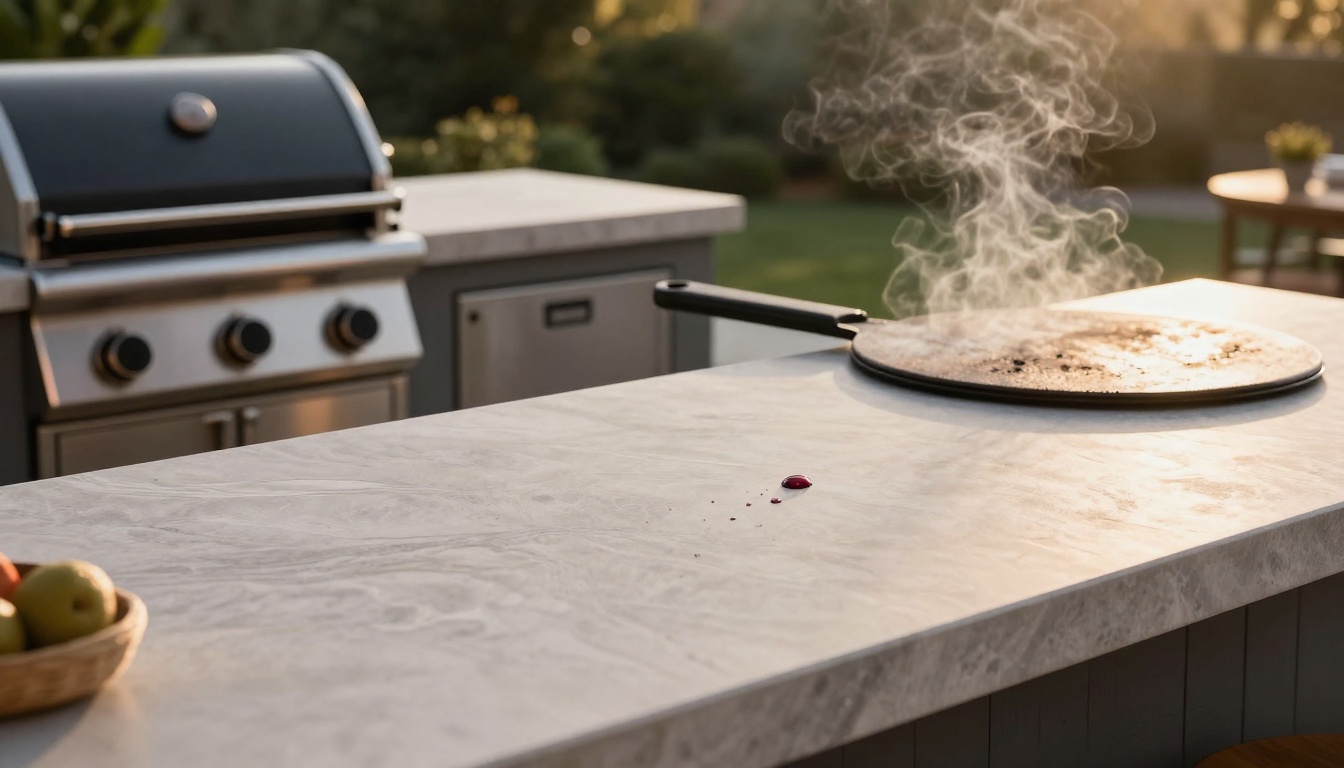
A great outdoor kitchen feels like a second home kitchen, until the first time grease pops, a red wine glass tips, or a blazing-hot pizza peel lands on the counter. Outside, outdoor kitchen countertops take a beating from sun, rain, soot, pollen, and freezing nights, sometimes all in the same week.
The good news is you don’t have to baby your surface to keep it looking sharp. If you choose the right material (and the right finish and sealer), your countertop can shrug off stains and handle serious heat without constant worry. If you’re planning a full build, start with a smart layout and material plan like the ones shown on https://seasonallandscape.com/hardscaping-services/outdoor-kitchens/.
What “stain-resistant” and “heat-resistant” really mean outdoors
Indoors, countertops mostly fight coffee rings and hot pans. Outdoors, they fight everything, including weather.
Here’s what matters most when comparing outdoor kitchen countertops in 2026:
- Porosity (stain risk): The more porous the surface, the more it can absorb oils, wine, sauces, and rust marks from metal tools.
- Heat tolerance (and thermal shock): Many materials tolerate heat, but rapid temperature swings can cause cracking or surface stress.
- UV stability: Some surfaces fade, yellow, or weaken under direct sun.
- Freeze-thaw durability: If water gets into tiny pores and freezes, it expands and can damage the surface over time.
- Salt air and corrosion: Coastal areas add salt spray that can stain, pit, or corrode nearby metals and hardware.
- Maintenance reality: A “tough” material still needs correct installation, occasional cleaning, and sometimes sealing.
If you’re building in the Chicago area or anywhere with real winters, it also helps to think about how the whole outdoor living space works together, from counters to pavers to drainage. This overview of planning and layout is a useful companion: https://seasonallandscape.com/bring-the-indoors-out-designing-an-outdoor-kitchen-for-your-chicago-backyard/.
Quick comparison: stain and heat performance by material
| Material | Stain resistance | Heat resistance | UV/weather | Best fit for | Watch-outs |
|---|---|---|---|---|---|
| Granite (natural stone) | Good with sealer | Very good | Usually good | All-around outdoor kitchens | Needs sealing, some colors vary in porosity |
| Quartzite (natural stone) | Very good with sealer | Excellent | Excellent | Heavy-use cooking areas | Still benefits from sealing, can be pricey |
| Marble (natural stone) | Fair | Good | Fair to good | Low-stain prep or bar tops | Etches from acids, stains easily, higher upkeep |
| Porcelain slab | Excellent (non-porous) | Excellent | Excellent | Low-maintenance, modern looks | Edge chips if abused, needs solid support |
| Sintered stone | Excellent (non-porous) | Excellent | Excellent | Heat and stain “set it and forget it” | Fabrication quality matters, corners need care |
| Concrete | Fair to good with sealer | Good | Good | Custom shapes, outdoor bars | Can stain, can crack, sealer upkeep |
| Engineered quartz (typical indoor) | Excellent (indoors) | Fair to good | Often poor outdoors | Covered patios only (sometimes) | UV fading and resin issues are common |
For more examples of outdoor countertop options people pair with hardscapes, you can browse surfaces and photos from suppliers like https://www.msisurfaces.com/hardscape/outdoor-countertops/ (use it for ideas, then pick based on your climate and habits).
Natural stone: granite vs quartzite vs marble (what changes outside)
Natural stone has a “real” feel that fits patios, paver borders, and brick accents. But not all stone behaves the same when smoke, sun, and spills enter the picture.
Granite: the dependable workhorse
Granite is a classic for outdoor kitchen countertops because it’s tough, handles heat well, and resists scratches.
Granite’s biggest weakness isn’t heat, it’s staining through pores. Many slabs do great with a penetrating sealer and basic cleanup. If you grill often, choose a pattern and color that won’t make you chase every tiny mark.
Good for: grill runs, busy family gatherings, most climates
Plan for: sealing, especially on lighter granites
Quartzite: high-end durability with strong heat_toggle
Quartzite is a natural stone (not to be confused with quartz). It’s typically harder and denser than many granites and it performs very well in sun and heat. It’s a strong pick when your outdoor kitchen is a real cooking station, not just a serving counter.
Quartzite can still benefit from sealing, but many homeowners love it because it combines a natural look with serious durability.
Good for: high-heat zones, sunny patios, freeze-thaw regions
Plan for: professional fabrication, sealing based on the specific slab
Marble: beautiful, but it shows life fast
Marble can be heat-tolerant, but it’s the most likely of these three stones to stain and etch. Lemon juice, vinegar-based sauces, and some cleaners can leave dull spots (etching). Outdoors, you’ll also see soot, grease, and leaf tannins.
If you love marble, consider using it away from the grill as a bar top, and accept that it will develop character. A honed finish can make wear less obvious (more on finishes below).
Good for: covered areas, lower-mess entertaining spaces
Plan for: frequent sealing, gentle cleaning, visible patina
Engineered and cast options: porcelain, sintered stone, and concrete
If your priority is “wipe it down and move on,” engineered surfaces can be a great match.
Porcelain slabs: low-porosity, high-heat practicality
Porcelain is non-porous, which means it resists stains extremely well. It also handles heat and UV exposure reliably, making it a strong choice for outdoor kitchen countertops that sit in full sun.
Because porcelain can chip on edges if it takes a hard hit, details matter: eased edges, good corner design, and strong substrate support.
Sintered stone: built for heat, sun, and stains
Sintered stone (often called ultra-compact surface) is made under high heat and pressure. The practical result is a dense, non-porous slab that resists staining and handles high temperatures well. It’s a top pick if you want a sleek look with minimal upkeep in harsh climates like desert sun or salty coastal air.
Tip: Dark colors can show dust and fingerprints outdoors, especially near a grill where smoke residue settles.
Concrete: custom shapes, real-world maintenance
Concrete can look amazing in an outdoor bar or a built-in kitchen with matching walls and seating. It also handles heat fairly well. The tradeoff is stain risk. Concrete is porous, and outdoor life brings oils, berries, rust, and wet leaves.
A quality sealer helps a lot, but it’s not a one-and-done product. Concrete can also develop hairline cracks, especially with freeze-thaw movement or if the base isn’t built right.
Finishes, sealers, and safe placement near grills and pizza ovens
Even the best material can disappoint if the finish and protection don’t match how you cook.
Honed vs polished: choose based on glare and cleanup
- Polished finish: More reflective, often easier to wipe clean, can show scratches and glare in strong sun.
- Honed finish: Softer look with less glare, hides light scratches better, may show some marks more easily depending on the stone and sealer.
If your patio gets intense afternoon sun, honed can be easier on the eyes. If you want fast wipe-down cleanup after burgers, polished can be a better fit.
Sealing basics (stone and concrete)
Most natural stones and concrete benefit from a penetrating sealer that soaks in rather than forming a surface film. The right sealer helps slow down absorption so spills don’t become stains.
A simple habit: test by placing a few drops of water on the surface. If it darkens quickly, it’s time to re-seal (follow the sealer directions for your specific material).
Heat-smart design around cooking equipment
A countertop doesn’t need to touch flame to get damaged. Radiant heat from a grill lid or pizza oven can stress some surfaces and adhesives.
Practical rules that keep problems away:
- Follow the appliance maker’s clearance guidance, especially for built-ins.
- Use heat shields, insulating panels, and proper venting where required.
- Add a dedicated landing zone for hot items (a small stainless insert or trivet area) so you’re not testing the countertop every weekend.
If you’re planning the full hardscape around the kitchen, including pavers and retaining walls that need to handle freeze-thaw movement, this overview can help tie choices together: https://seasonallandscape.com/the-best-hardscaping-materials-for-your-landscape-design/.
A quick word on typical indoor quartz outdoors
Many engineered quartz slabs use resins that don’t love UV exposure. Some manufacturers and fabricators warn about fading and performance issues outside.
Conclusion: pick the surface that matches your cooking style and climate
The best outdoor kitchen countertops don’t just look good on install day, they stay calm under heat, spills, sun, and winter. Granite and quartzite are strong natural picks, porcelain and sintered stone offer the easiest stain resistance, and concrete shines when you want custom style and don’t mind periodic sealing.
Choose with your climate in mind, pair it with the right finish and sealer, and treat the grill zone like a heat source that deserves smart spacing. Your future self, holding a plate in one hand and a drink in the other, will appreciate the low-stress choice.